Make your motherland blossom and thrive
Cast down the colonial seat of might
Khawja Farid
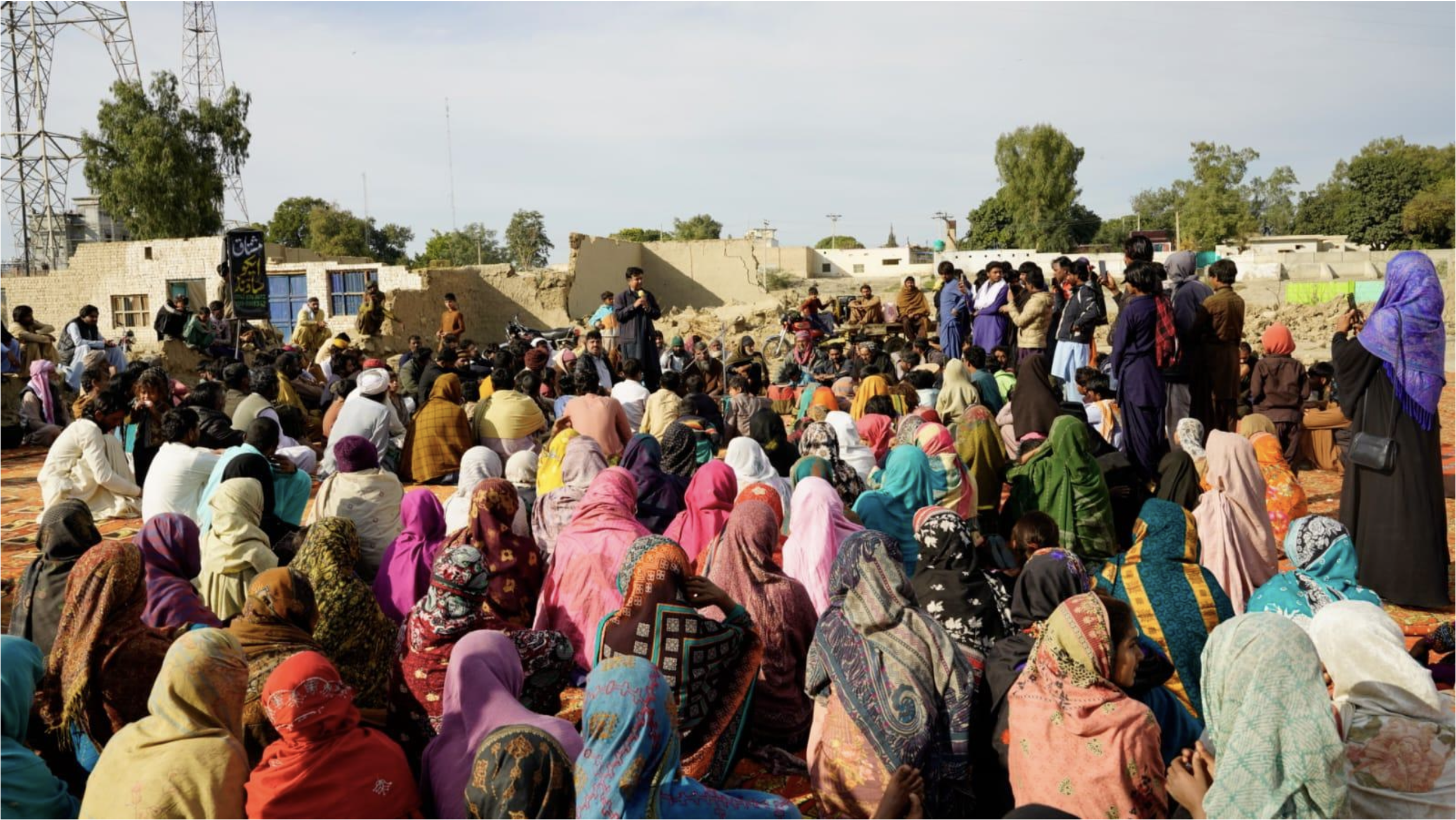
The Sath is the way of our peoples. It is the form and language by which we deliberate, assess, judge, and author. It is our law-doing, in which we create laws, which speak to our worlds, of/in relationships between ground-water-air. We call this Sath to respond to the latest incursion into our worlds, as you demolish our shelters in the name of your Law, we assert our law and our judgement.
Updates
This Notice and all illegal actions by PERA on the former World Bank rehabilitated site have been challenged before the learned District and Sessions Judge, who through an order dated 06-04-2026 has granted a stay order to halt further demolitions for the timebeing.
Click here to follow the updates on the case.
Naming the World
In 1957 our worlds were made into your World, a World of destruction, deracination, desecration.
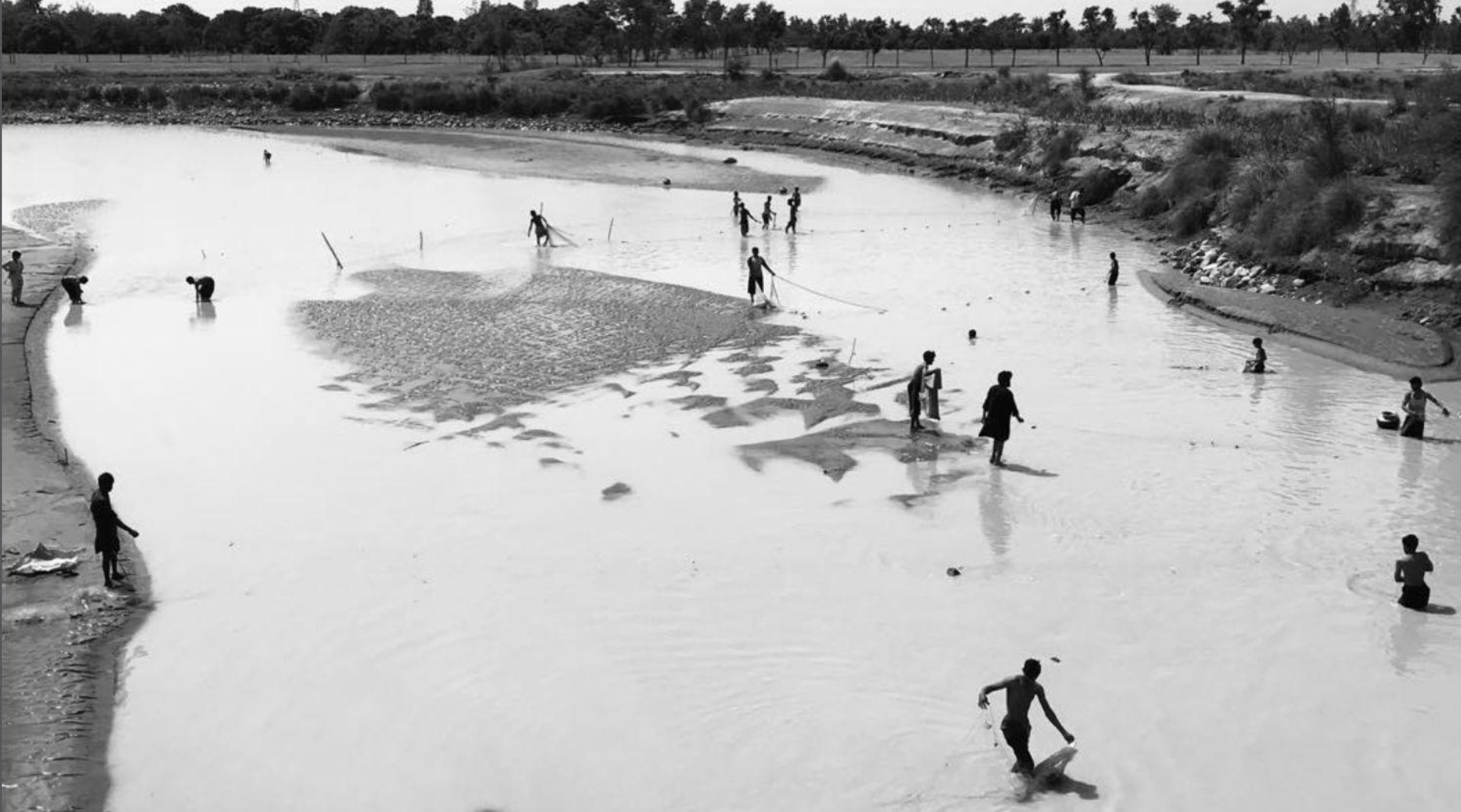
The construction of T aunsa Barrage was the first incarnation of that World, separating us from the waters which carried our worlds, removed from our entangled worlds, spirit worlds, material worlds. Built to feed the thirst of cities and peoples far away. And with this came a World of commodifying our waters, enclosed and made into property for the rich to place bids to extract. Drawn into a World of extraction and exploitation our fishing livelihoods subject to the vagaries of state and contractors, transforming us into bonded labourers, slaves, on our waters. In these ruins we built life, lives, stewarding the waters and all tied to the river, from the bulhan, the hanns, the jhali, knowing the patterns and cycles of water and life.
At the turn of the century new plans were built to ‘rehabilitate the failing barrage,’ hand in glove with the World Bank, a new project. And in this project we were removed again from the life that we had built. We indicted your ways of knowing the World, showed you how your systems and practices destroy, and you replied with promises of ‘resettlement.’ And so in 2007 you moved us again. We argued at the time that this resettlement without any accrued legal enforceable rights is simply postponed eviction. And that is what has come to pass. From the shore to the ground. And we built again, we cared, we weaved and we were the stewards for life again.
In 2026, for reason we can only speculate, your World comes to take from us again. Bulldozers have torn apart our homes, raising sixty homes, and carrying threats of more destruction, backed by a Law that is indignant towards our suffering. And so we indict you again. Here at our Sath we indict your World, its practices and what lies beneath.
Naming Ourselves
Asked who we are.
The truth is this:
We are tokra weavers
We are weave shelters
We own no land, no herds, no property
We weave shelter
From straw, from reed, from broken branches
Gathering what the seasons leave behind
and returning what remains to Sindhu
Our hearts as vast as the universe.
And the truth remains
We are weavers of shelters, of life.
Ahmad Khan Tariq
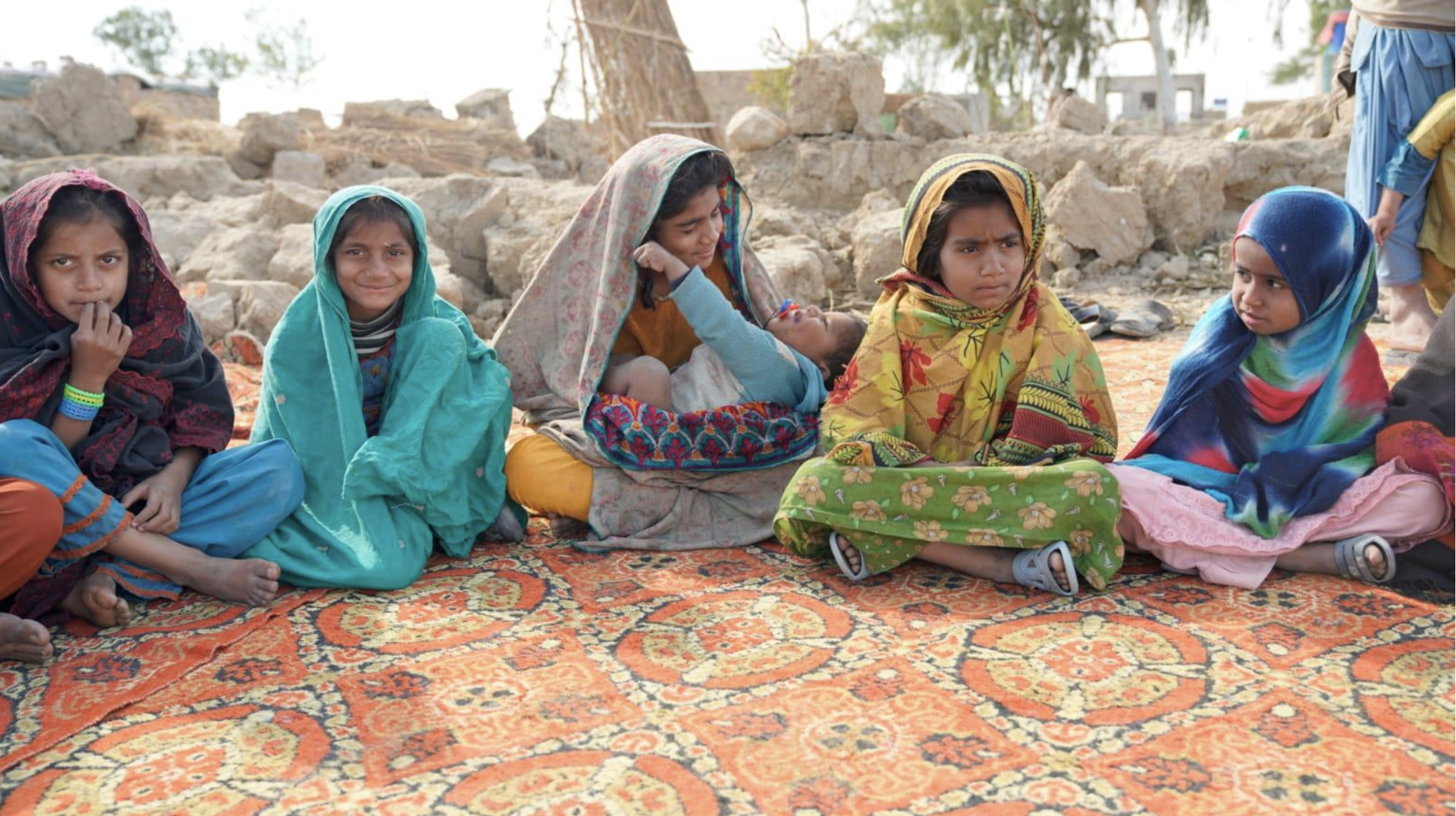
Our lives can not be condemned to an entry on a form, on a card, or a line on a map. We do not begin from what your World has attempted to force upon us: land titles, property, possessions and assets that can be counted or seized.
You include in one breath - state issued identity cards and utility-bills naming our basti - and deny our existence in the next - sending your bulldozers to do to us materially what you do to us in thought, and speech. You built the Machine, the barrage, that controls our lives - the flows of the waters, the breeding pathways of the fish and birds - and yet you turn to us to repair that Machine, to fortify the embankments, work that no others will do, forcing us to sell our labour to maintain that which has imprisoned us.
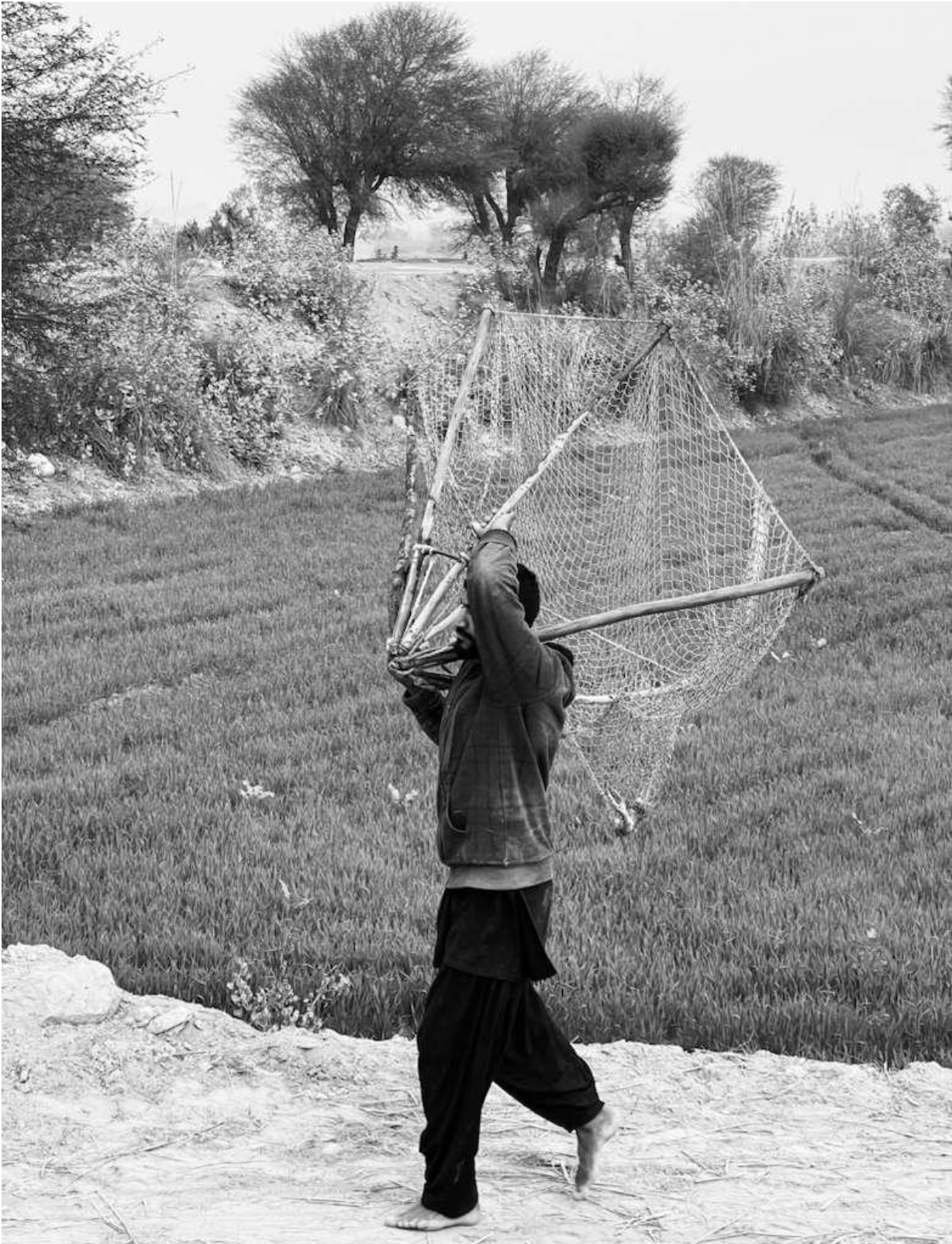
And so we will begin elsewhere - from the very weaving of life. Like weaving the tokra (basket/shelter), we weave life with/from Sindhu. We weave life from what the seasons leave behind and what the waters offer us. From kaanh (reeds), straws, branches, and with hands and the time that flows with waters. We weave nets through which to catch fish, releasing the young back into the waters so that life may be sustained. We keep only what we need, except for what we are forced to extract through the violence of the Thaykaydar (fishing contractors). Our relation to Sindhu is not ownership and not lack. It is kinship, care, and return. It is a practice. Weaving T okra is an earth practice. It is a practice of knitting life, letting birds sleep, preserving food, enduring rain, sustaining dignity but all without accumulation.
We are known by many names - the kehal, mor, mohanay, sindhi - but we are all the river-born, river-dwellers. We are in, and of, the waters of Sindhu, its banks, and its forests. We refuse to be named by the categories that make us legible only to dispossession: landless, encroacher, beneficiary, affected population. We refuse to be ascribed identities - indigenous - crafted as objects of aesthetic consumption, of this new romance with the Sindhu, and the climate anxieties of a certain World. These names erase. We name ourselves through our ways of being with Sindhu. We weave life in relation with Sindhu, not against it. Our hearts are vast because our world is relational like waters, not parceled, fragmented. Our being is as circuitous as waters flow, and can not be contained.
What you call an absence - of property, of title, of subject - is the presence of another ethic, (an)other worlds, our worlds. One that does not extract, does not hoard, does not sever life from its ecological conditions. We are not asking to be included in your definitions. We are indicting them. We insist on being known through how we live, how we weave shelter/life and our form, and how we remain with waters as it remains with us. Our being is defined by reciprocity with the waters.
Naming resettlement
The Sindhu is a patterning of ground, water and air and it is ‘ours’. ‘Ours’ is a gathering of relations, a gathering of kanh-ghara-bulhan-pattan-pakhi-kachoo-machli-dhund-jungle (Of reeds, dolphins, birds, turtles, fish, waterpots, waters-edge, ponds). Of the many grounds and waters of Sindhu. Of islands-of-tides-shores-currents-forests. Of the many times of Sindhu. The ancient, the seasonal and the lived/embodied?. Sindhu is a gathering of care. A gathering of stewardship. A gathering of entanglement. A patterning, that means just as our ground-water-air alters matter, so it alters the human and the non-human. Our homes expand, our gatherings and our lives change. That which you call ‘land’ is so much more.
In 2007, you named this ‘pattern’ in your language of resettlement, to make us into an image of yours, you spoke in the language of land granted, of compensation, and of awards closed. But this is a ‘land’ that does not sit, this is a patterning that always already moves. The waters take, the waters give, land erodes, and land is made. And so ‘Resettlement’ is not something that happens; it is an ongoing process.
And in 2026 you again tear away at our gathering. And by doing so you tear away at our ways of stewarding the waters and its beings, leaving the bulhan bereft of our care. Like a fish cast onto dry land to die, so it is that your bulldozers cast us from the shores, for us, the river, for all relations, to die.
The building of Taunsa Barrage and the Rehabilitation project, funded by the World Bank, shattered that movement and the ability to weave shelter. When the World Bank claimed in 2005 that its project will not result in any displacement - it was wrong. When the resettlement action plan eventually came - it was deeply flawed and contradictory, leaving us in a state of ongoing precarity. And now, when the builldozers land up at our doors, you abdicate responsibility.
And so, we hold you accountable for the rupturing of our relations with Sindhu - for the unmaking of our World.
Naming our worlds
The Sath asserts our worlds, we lay claim to our worlds:
And this Sath says enough!
1. It demands that the Punjab Government cease its practices of displacement and eviction from lands and water that have been ascribed as ‘ours’ in ancient texts, and provide compensation to those families whose homes have been destroyed.
2. This Sath asserts that the World Bank has an ongoing responsibility as the author of unmaking our world. That the World Bank bears responsibility for creating a resettlement regime that produced long-term insecurity. That resettlement without ‘ownership’, or collective ‘tenure’, or stewardship ‘rights’, was not justice but postponed eviction. We assert that ‘Resettlement’ is an ongoing mandate - it continues so long as life - human, ecological, and riverine - remains disrupted. The mandate is to provide shelter, the terms of which are ours to determine.
As such the World Bank and the Punjab Government must issue a public acknowledgment of harm and an institutional apology to the gathering at Basti Sheikhan. This is not symbolic, it must accompany binding reparative commitments.
3. This Sath asserts that the language of Law is being used as force. Your claim over our ecological relationships we reject - the ‘absence’ of land titles is not proof of illegality, but rather proof of an erased law - we repudiate your Law. We name the practices of the Punjab Government for what they are: displacement and eviction from lands and waters that were never empty, never uninhabited, never without law. Our land and waters were not discovered but made through power, through maps, files, and force. What you call state property is the violence of this making. We demand accountability and reparation for unsettling our world, our law, that gathers in the flow of the river, in making kin, in seasonal movement and (re)settlement, and in collective life becoming.