In 2008, the Government of Pakistan created the Thar Coal Energy Board (TCEB) following on from a 2002 policy to utilise the country’s indigenous coal reserves. The exploitation of these local lignite coal reserves was justified due to the high cost of electricity and growing circular debt in the energy sector. Much like every major power policy and project that preceded it, Thar Coal was presented as the light at the end of the tunnel for Pakistan’s energy woes. And much like all of the previous projects and policies, it has failed miserably whilst undermining and oppressing the local communities.
Both Thar Coal Block-I (TCB-I) and Thar Coal Block-II (TCB-II) have caused significant harm to local communities by polluting their waters, expropriating lands, threatening those who dare to protest, and sowing division amongst communities that have lived peacefully together for generations.
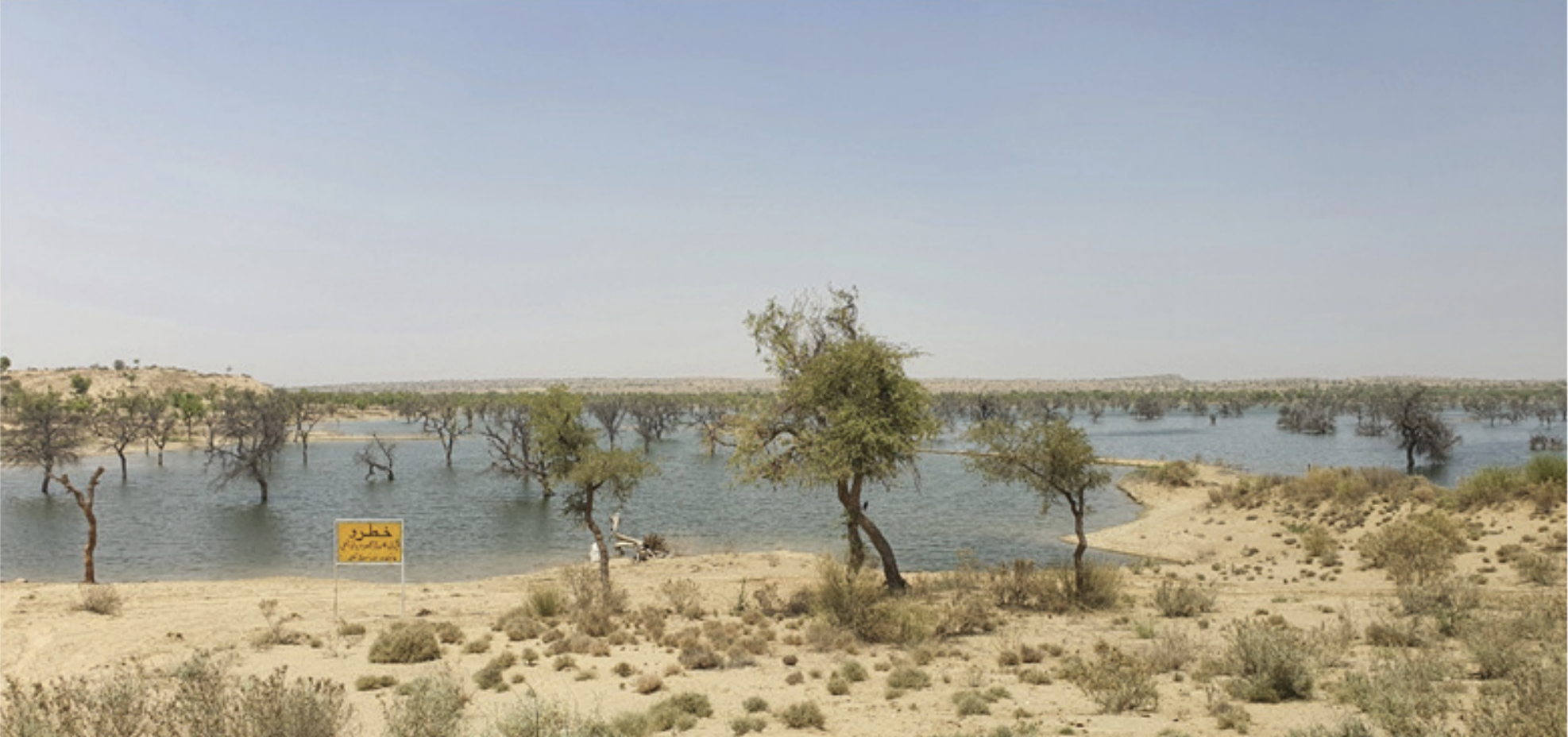
“Our ancestors are buried here. If the British did a survey and did not include us, is it our fault? We were here after the British left. Now where shall we go? Should we disown our land and leave? Instead of supporting us, you are forbidding us to plow the land. They say they will beat me if I use my ancestor’s land. No one asked us. No one sought our permission.”
Gorano
“The selling of land is counted as disobedience in (bradri) village. Whether the rate of land was low before the reservoir but we were not selling the land easily. Now our land is forcibly occupied, and we are being evicted. They are taking our land and not listening to us.”
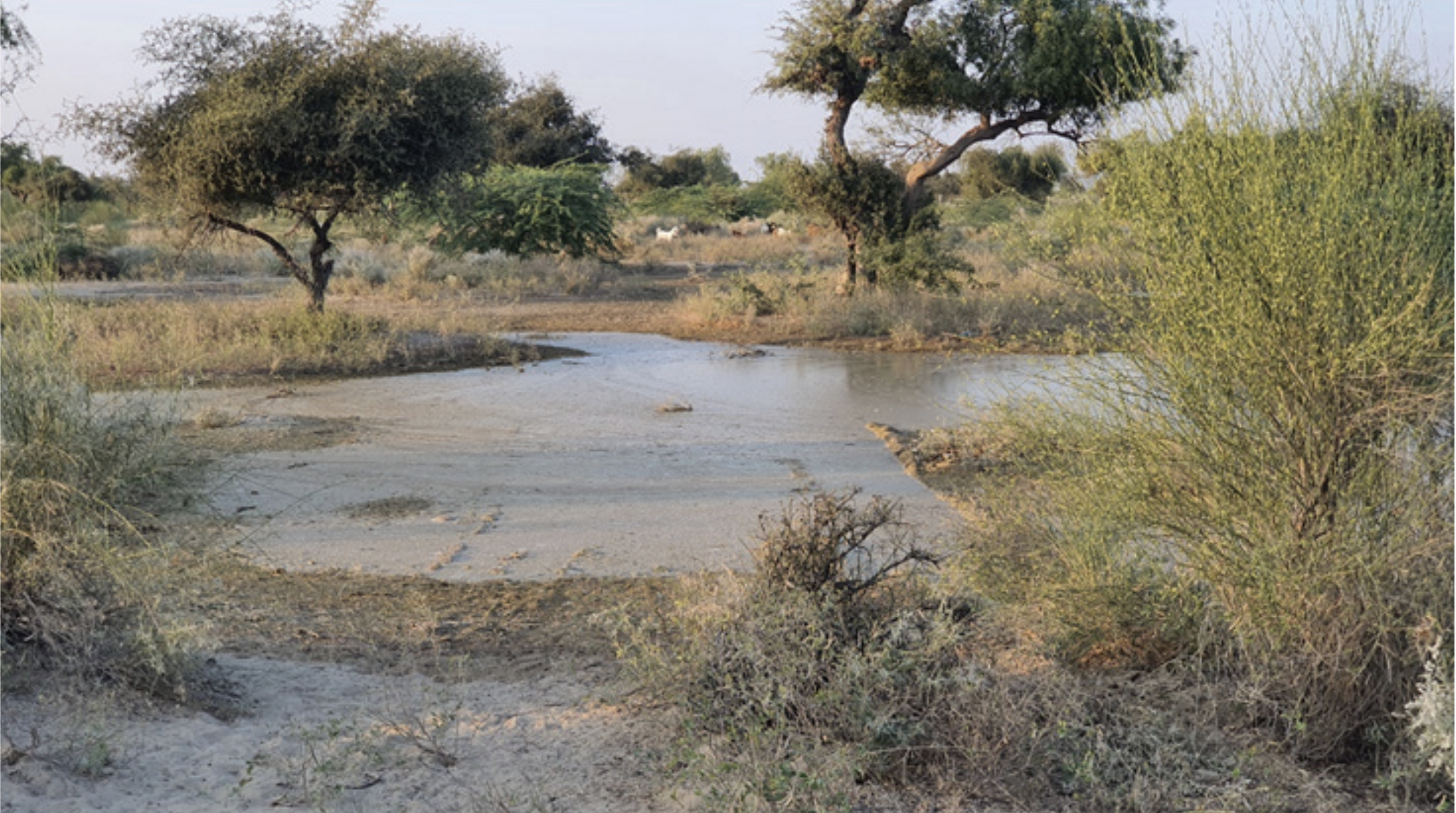
Despite their close relationship with the land, the people of Gorano were willing to give out their land on a lease to the authorities until the mining operations stopped. This offer fell on deaf ears as the government chose to threaten the villagers through fake cases. The people, however, were determined and continued to protest for their rights in Karachi.
Owing to a lack of attention from the media, the people of Gorano were forced to take their protest to the Sindh High Court where they were offered an insultingly small compensation. Their entire way of life had changed and the locals were forced to work as wage labourers, losing annual incomes of PKR 100,000 to PKR 300,000 per acre. The locals never viewed land as a commodity - its value could not just be quantified through the agricultural output it could produce or the cattle that could use it for grazing.
SEHNRI DARS
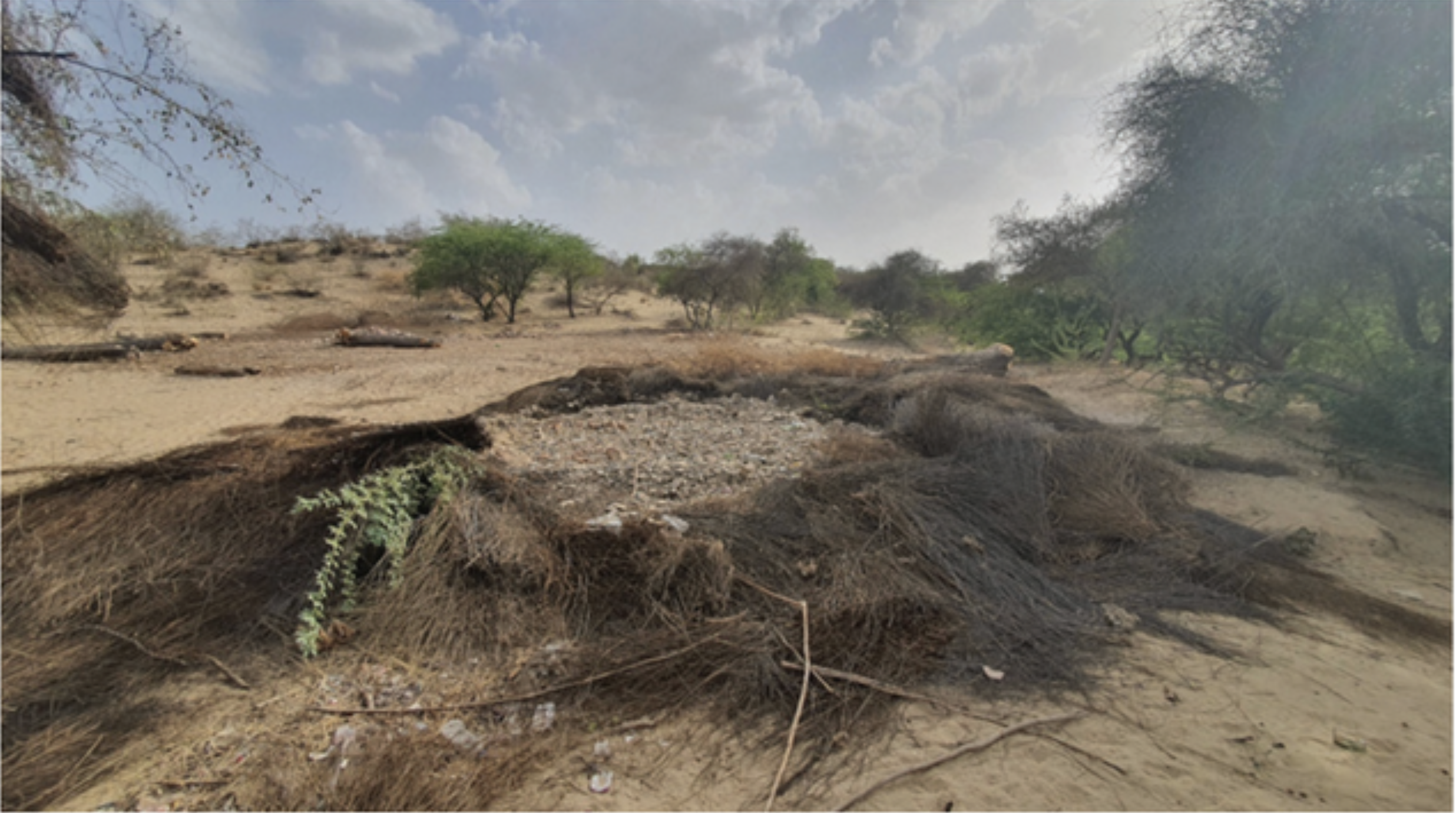
Remains of a hut in Senhri Dars that was destroyed.
The village of Senhri Dars was unfortunately located right in the middle of the coal mine required for TCB-II, leading to the creation of a ‘model village’ with 172 houses built for 320 families. While the new village was presented as a novel solution with great aesthetics, it has only brought pain for the communities who do not own any of the houses, nor have they been compensated for the loss of land and livestock. Meanwhile, the planners of the model village have not taken into account migratory patterns and have also prevented the families from extending their homes as they would have been able to do in their old village. This has created a suffocating environment for the growing population and the case of Senhri Dars has become a cautionary tale for the region.
Thario Halepoto
The case of Thario Halepoto represents one of the most sinister tactics employed by the Sindh Engro Coal Mining Company (SECMC) as two communities which had lived for generations as neighbours were pitted against each other. The issue began when the residents of Senhri Dars were granted grazing land in the village of Thario Halepoto as none of it was made available in the model village. The Halepoto community had ancestral claims to this land and had used it for grazing along with some cultivation in the monsoon season. Thus, two communities now had conflicting claims to the land through no fault of their own and eventually culminated in the arrest of 12 people who committed the crime of ‘trespassing’ on land that they had an ancestral claim over.
Bhavay Jo Tar
The village of Bhavay Jo Tar has turned into a prison for the local community. Surrounded by barbed wire and fencing with searchlights placed on them throughout the night, the people of the Kohli group are made to live like prisoners in their own homes. The authorities failed to develop a proper resettlement plan for the area as noise and dust pollution further increased the suffocation of the people as some chose to leave the area as their pleas go unheard.
These woes are unfortunately not limited just to the above mentioned communities. In Khario Ghulam Shah, Talwaiyo, and Verwai have faced similar problems.
Water
In order to extract the coal, water is withdrawn from several layers of aquifers located underground, severely depleting the water table in the process. In order to deposit the drained wastewater, reservoirs were constructed in Gorano and Dhukar Chao, meanwhile some of the wastewater was also re-injected back into other aquifers. Any left over drained water is treated through Reverse-Osmosis (RO) plants which were installed with great fanfare. The locals have, however, pointed to their distrust in the plants, reporting body aches and bone problems. Meanwhile, their livestock still depend on water from the wells which used to be sweet prior to the establishment of the coal plant, but has now turned brackish and has taken the lives of several animals. The companies responsible for this pollution have denied these testimonies without any evidence to back their claims.
The wells had been the only source of water for the locals, who spent around PKR 700,000 constructing each well and were now completely unusable. When taken to court, both Thar Energy Limited and Engro PowerGen Thar rejected the claims and questioned the validity of the water tests despite their robustness showing high levels of arsenic, lead, mercury and chromium. Once again, the locals were fighting in unfamiliar waters and did not possess the resources and political capital held by those they were taking to court. The court delivered an unsatisfactory verdict which did not compensate the locals at all for their losses.
The infrastructure of the coal plants is not restricted to the two mining blocks. In order to properly function, the coal plants require massive amounts of water, which is supplied through the Farsh-Makhi canal and reservoirs in Umerkot and Vejhiyar. The reservoir in Vejhiyar seems to be placed there purely for cost-cutting purposes and to transfer all the risks to the local communities. There are several cracks visible in the infrastructure of the Vejhiyar reservoir as it is barely even able to hold rain water. There are genuine concerns regarding possible flooding due to the weak foundations of the reservoir, putting more than a 100 families at risk if it does. Furthermore, the poor planning of the reservoir has split up communities and forced them to travel longer distances in order to reach their agricultural and grazing lands. Protests and legal action have both failed to make a difference to the lives of the locals despite small promises made by the Deputy Commissioner.