The Torwali people of Bahrain Tehsil, Swat, number about 150,000 and have lived among the rivers, streams, and forests of the Swat Valley since before the Aryan migrations. Their way of life is inseparable from the landscape. They cultivate terraced fields along steep slopes, following local folklore preserved in Bahadar’s Almanac—an indigenous oral calendar that predicts weather patterns and allocates irrigation water through six time slots from dawn (zjaad) to late evening (zjaat), ensuring equitable distribution.
Springs and mountain brooks remain their only sources of drinking and irrigation water, managed through customary rules. Forests are governed by local institutions such as the Doralai Forest Protection Committee, which regulates cutting, ensures regeneration, and allocates timber for burials, mosques, and heating. Pastoralism also continues, with seasonal herding of cattle (gou) and goats (bugo) to upland pastures. Farmlands, forests, and pastures are common village property, sustained through a balance of subsistence and conservation. 65,000 are affected by the Madyan Hydropower
“Bahadar knew there was a day in the summer when stones would get softer. Once he was able to thrust a pickaxe into a boulder at that particular time, as the boulder was soft enough to be penetrated by a pickaxe. Later, the stone hardened again, and the pickaxe remained stuck in there. Bahadar told the people that he would be able to extract the pickaxe at that particular time on that particular day the following summer. He waited until that day and pulled the pickaxe out of the boulder when it became softened again.””
Culturally and linguistically distinct from the later Pashtun settlers, the Torwali identify as Indigenous. Their lexicon encodes ecological stewardship, with distinct names for every plant, animal, mountain, gorge, and spring tying together naming, ritual, and custom. Mountain passes are called gail, a word that also signifies the horizon and the moment when the sun dips, marking the return of cattle to their homes until dawn.
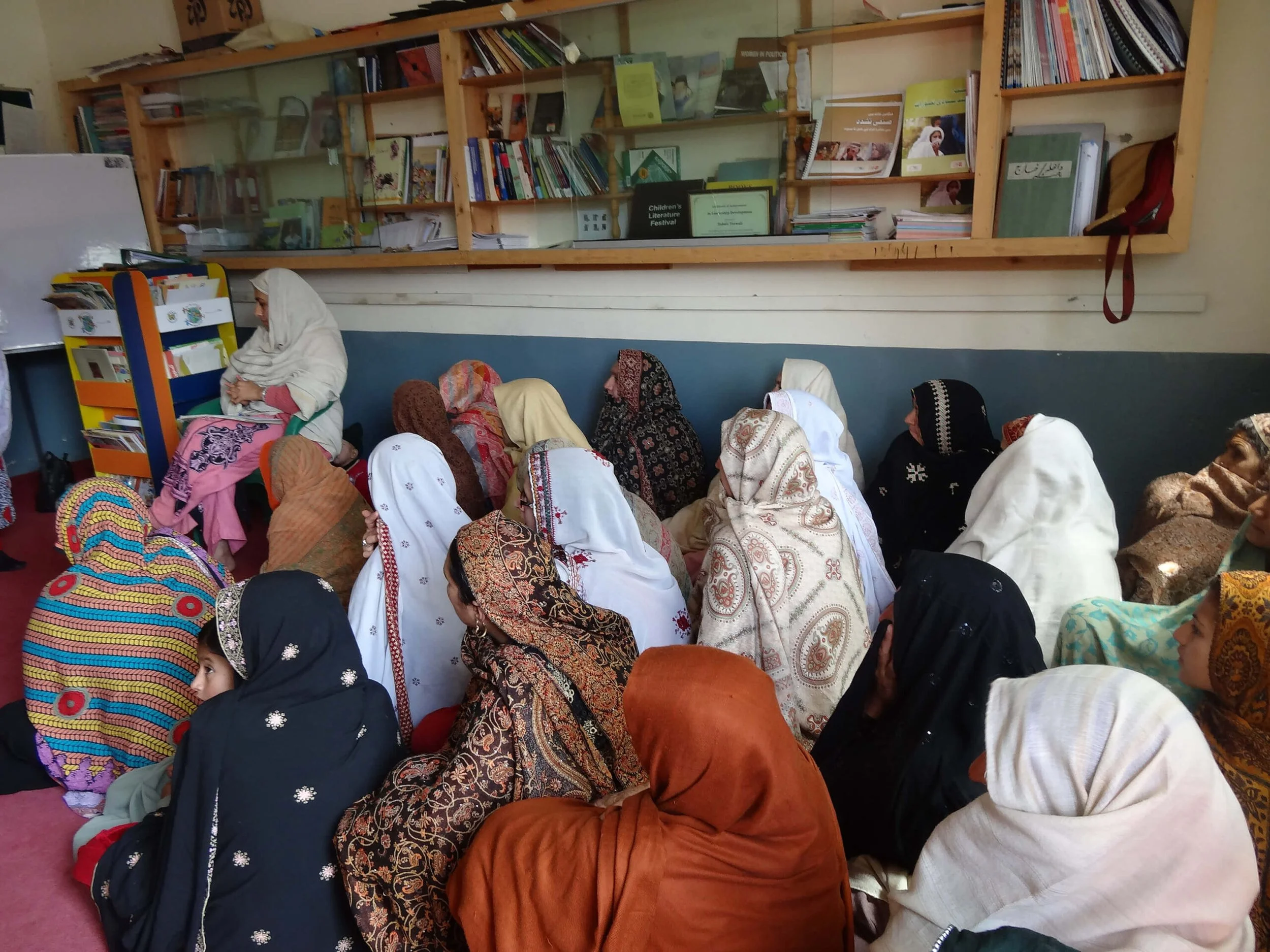
The Torwali inherit a rich oral and poetic tradition shaped by their relationship with the Swat River. Women play a central role in this cultural life. In Zjo, a genre of Torwali oral poetry, nearly 70% of poets have historically been women. Communal springs (guthur) serve as cultural nodes for women to gather, share poetry, songs, and stories.
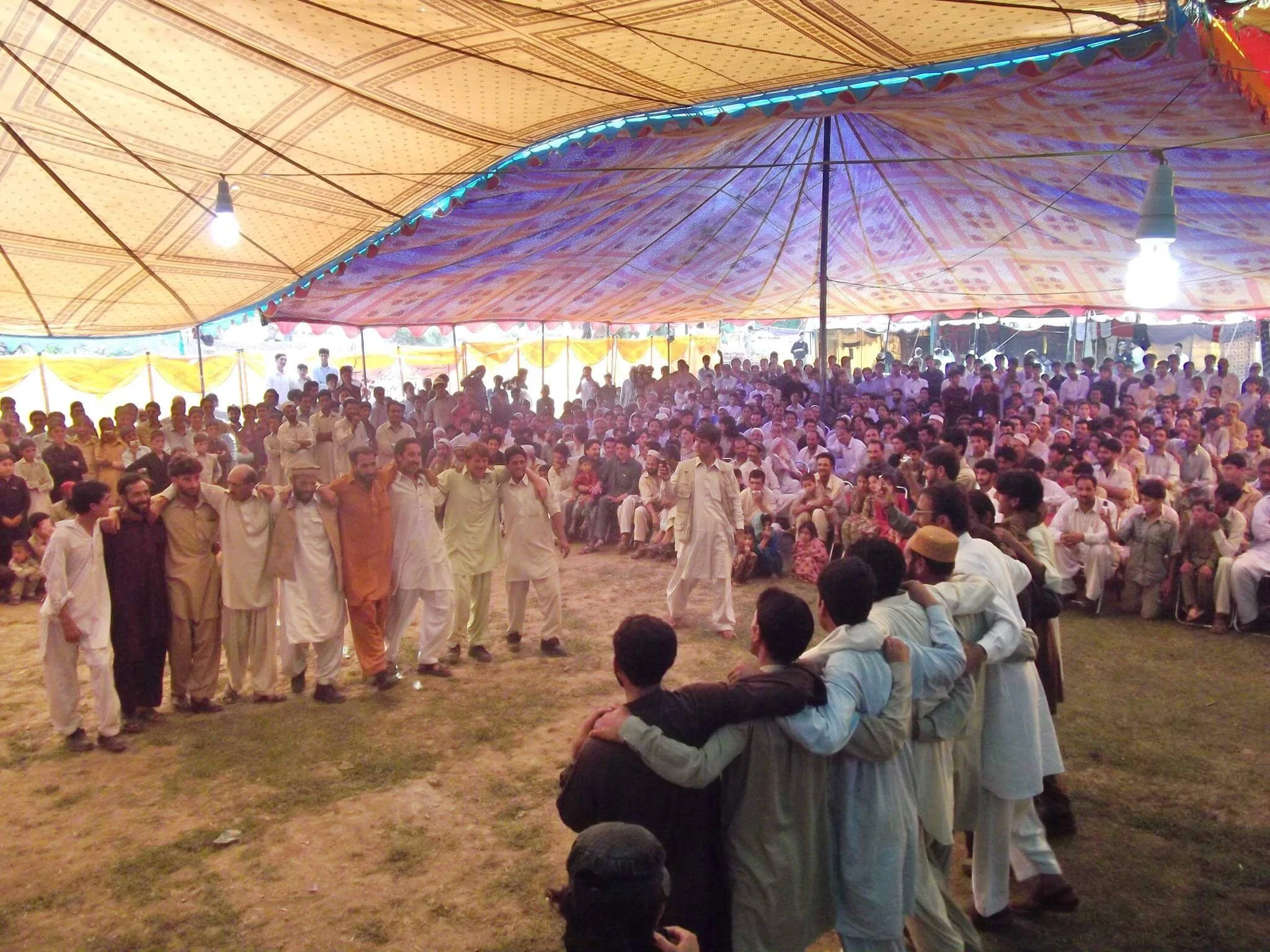
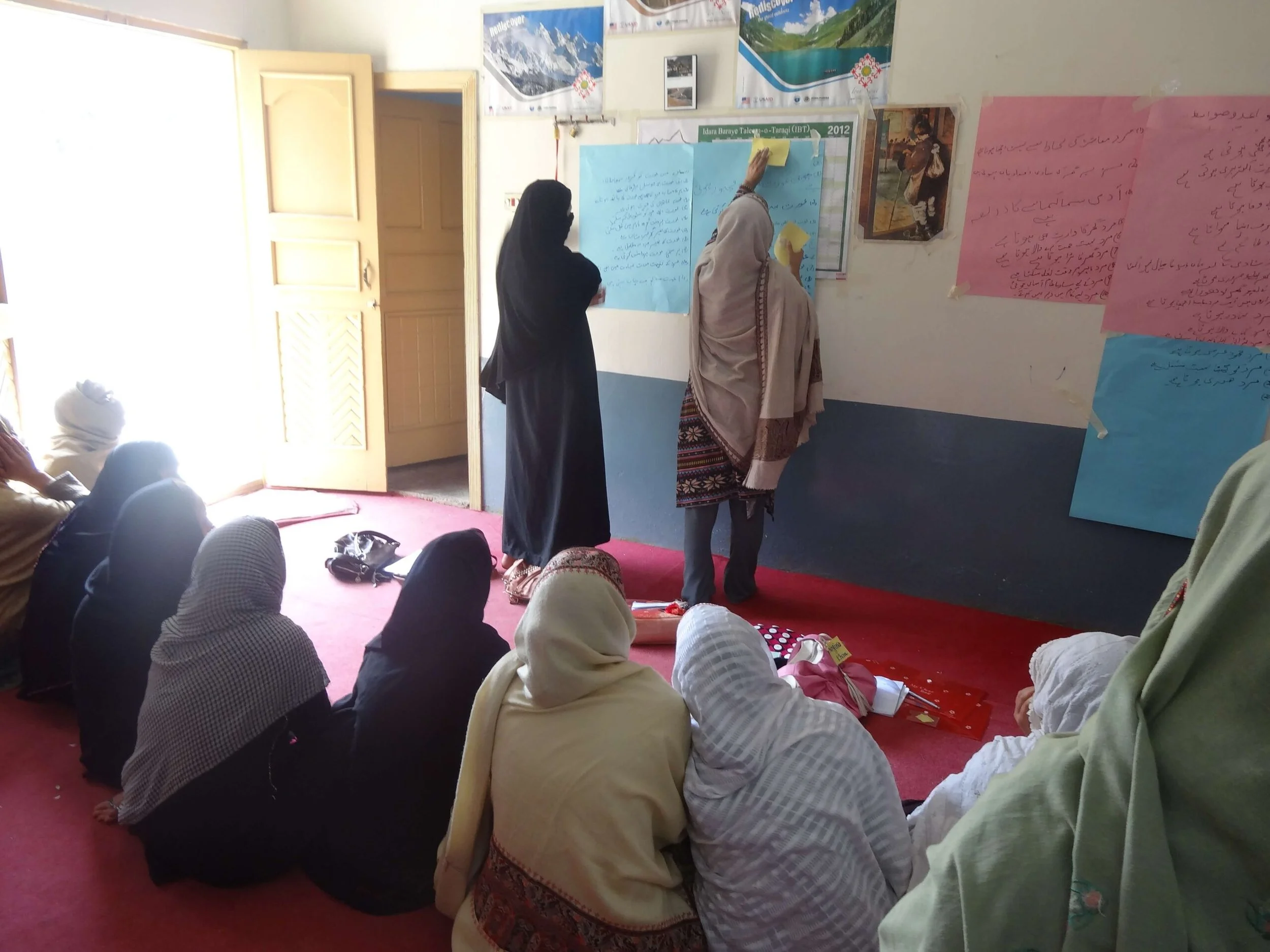
Festivals such as Simam celebrate traditional games, songs, and dances that strengthen communal identity. Through Torwali-led institutions such as the Idara Baraye Taleem wa Taraqi (IBT) and the Uthal Mountain Research Center, the community has developed a written script, published dictionaries and folk poetry collections, and established multilingual schools where children begin learning in Torwali before transitioning to Urdu and English. Parallel literacy programs for women have further reinforced pride in their language, countering the marginalization that has endangered it in recent years.

آ مھی تھئے سوال تھو اوتھل کھن سی بورا
ایک یأری می دلال نہ گݜ دوئی ڙو نہ سوا
æ mhi theyē sūāl thū othɘl khɘn si borā
ek yæri mi dɘlāl nɘ gɘş dūi ʑo nɘ sɘā
Translation:
I implore you my beautiful beetle of the high mountain
In matters of love, neither make Zo, nor employ the middleman
Today, this living culture faces existential threats. On 24 September 2020, the World Bank’s Board of Executive Directors approved the Madyan Hydropower Project (MHPP) under the Khyber Pakhtunkhwa Hydropower and Renewable Energy Development Program (KHRE). The 207 MW project, implemented by the Pakhtunkhwa Energy Development Organization (PEDO), is the first large-scale dam on the main stem of the Swat River, financed 80% by the World Bank (IDA/IBRD) and 20% by the provincial government.
بُوڑ ایشانا پہیِم گَلَدی حُسین زیبا
کامے اُوسو سی اُو پُوئی أنگی دے پشا
būṛ ešānā pahim galadi husen zebā
kāme ūso si ū pūyi æŋi de pašā
Translation:
Hussain Zeba all these glaciers melt alike
Show me the spring from which to drink.

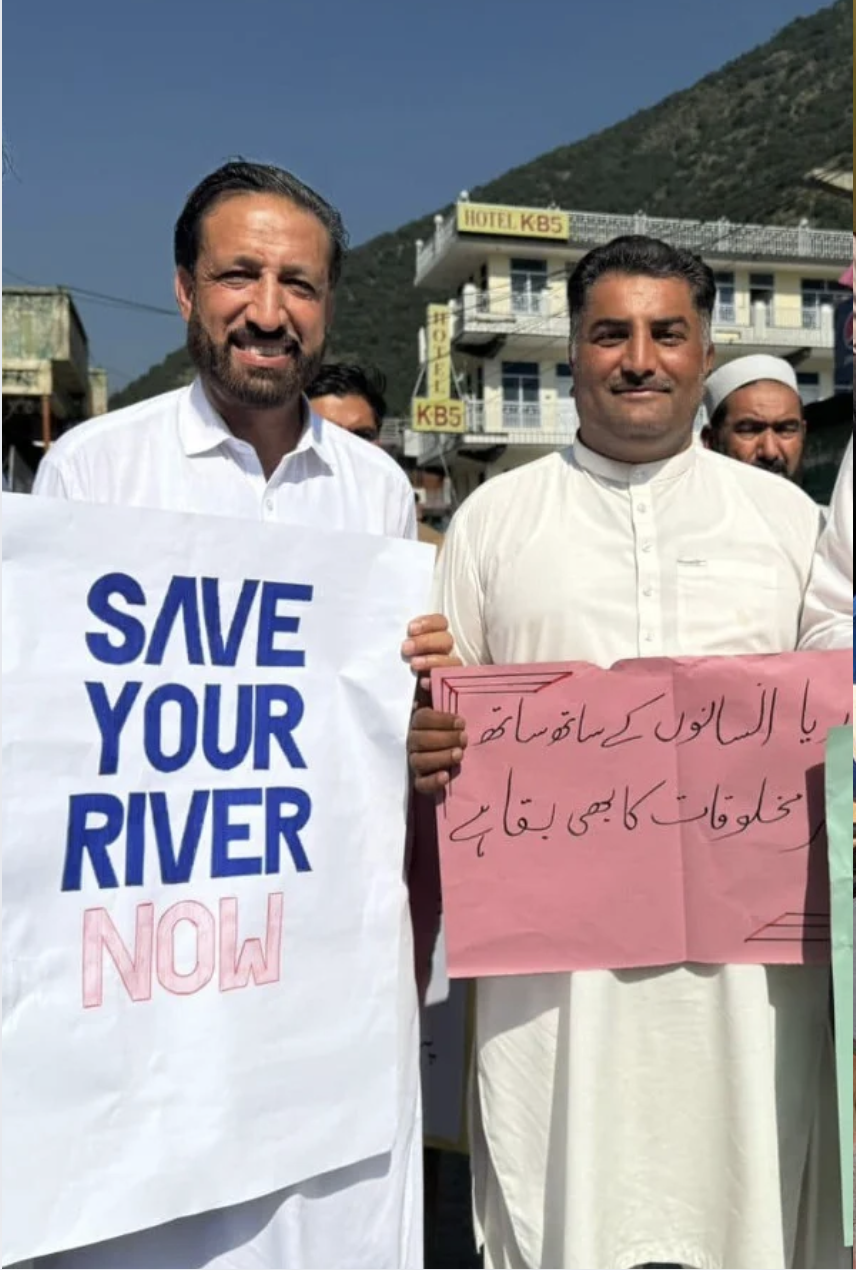
From the beginning, the Indigenous Torwali community of Bahrain Tehsil objected to the project, asserting ancestral stewardship over the river, forests, and surrounding ecosystems. Organized under the Darya-e-Swat Bachao Tehreek (a grassroots Torwali-led movement representing every local village and tribe) they opposed the MHPP for violating international Indigenous rights standards. The project fails to recognize the Torwali as Indigenous, even though 20 of their villages, 141 households, and 1,110 people fall within its direct impact area along with the 65,000 people living in the 20 villages across the River Swat . It also proceeded without obtaining their Free, Prior, and Informed Consent (FPIC). Moreover, it relies on outdated hydrological models, excludes climate risk assessments, and threatens to dry over 30 freshwater springs that sustain more than 25,000 people. These risks mirror the ecological and social harms caused by the nearby Daral Hydropower Project (2012–2022), which led to drying springs, failed crops, deforestation, declining tourism, and greater flood risks after being rejected by the Asian Development Bank but still built by PEDO.
The Alternative Law Collective (ALC) has worked alongside the Torwali community and the Darya-e-Swat Bachao Tehreek to document and challenge these violations of Indigenous and environmental rights. Together, they have brought their concerns before the United Nations and the World Bank itself. During this struggle, Torwali community members and activists have faced threats of abduction, violence, and arrest by PEDO officials and local authorities; however despite the hurdles the Torwali people persist in their call to save the river Swat along with their own identity, culture, and livelihoods.